
Software Isn't Dead
AI Needs Software To Survive

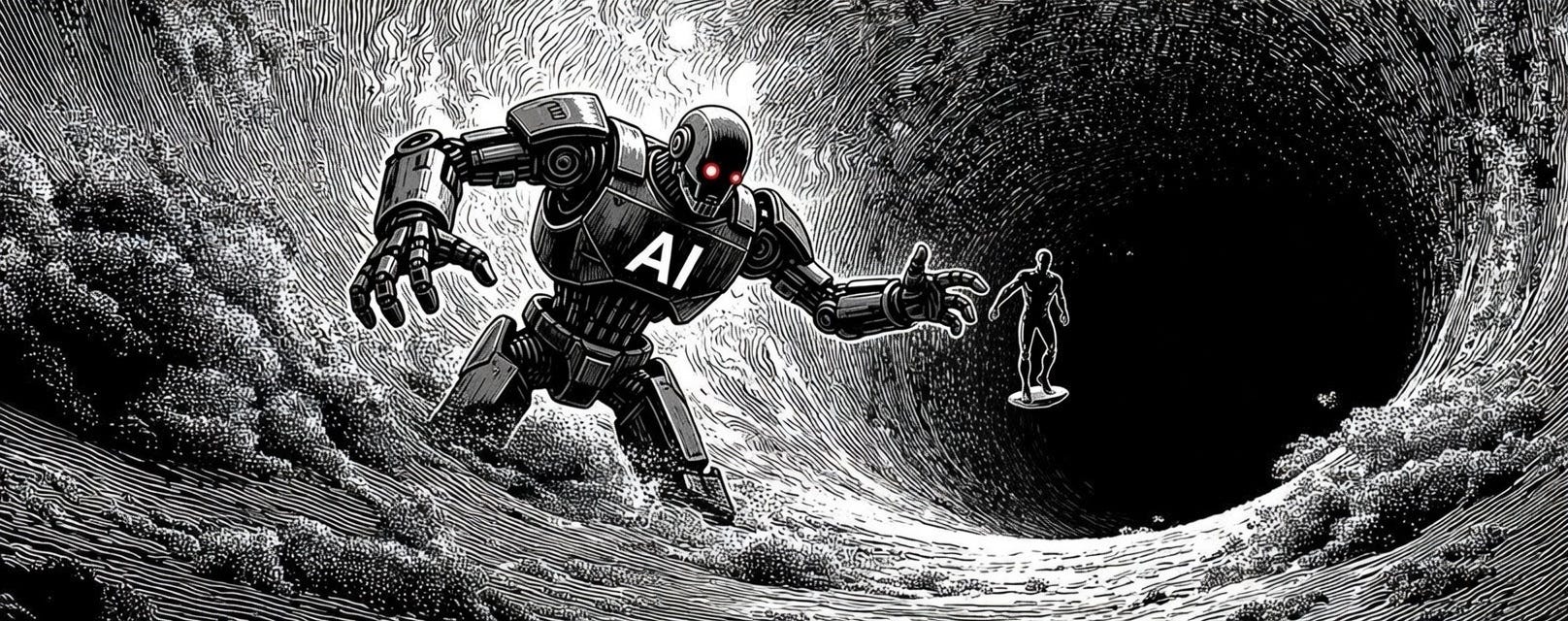
If you’ve been following Residual Thoughts, you might’ve noticed this is my third thesis on AI vs Software. I believe thesis work is a craft and should always be challenged as the world is rapidly changing. This is my revised thesis on the battle between AI and Software.
In addition, I’m changing up my writing style a bit. This was originally written for X Articles (thus, the writing style is slightly different from my previous pieces). You can find the X article here.
Lastly, apologies for the inactivity. I’ve been traveling in Costa Rica (pura vida baby) earlier this month, and I’m slowly readjusting back to the routine. Expect weekly pieces moving forward!
Enjoy :)
If you’re an investor, you probably thought that AI would kill software.
It’s the appropriate assumption: AI is an all-knowing being, AI is coming after workflows, AI is coming after you and me.
Software is dead. End of story.
This is an elementary and immature view of the AI vs Software debate, avoiding the beauty of software in the first place. If we do some incremental reasoning, the narrative flips.
Software’s Defensibility
Marc Andreessen wrote how “Software Is Eating the World” back in 2011. Over a decade later, the consensus view is that “AI Is Eating the World.”
The WCLD index, which tracks BVP’s Nasdaq Emerging Cloud Index is down 16% in the last year. Salesforce is down 30%. Atlassian is down 53%.
AI? Nvidia is up 35%. Google is up 66%. PLTR is up 138%.
Software is dead, but I believe markets are wrong.
When I think software, I think system of records. And system of records are sources of ground truths. These are undeniable truths that guides the firm’s strategy.
Do I hire more? Do I increase S&M expense? Do I increase prices?
These are examples of questions answered by systems of records within an enterprise.
What’s AI?
AI is autonomous software that’s generated for the first time, every time. Software, on the other hand, is pre-recorded software that was written by engineers, compiled and distributed to the masses.
The better question to ask: what is AI’s purpose?
AI’s purpose is to replace human labor.
We call them AI Agents. Emerging winners are as follows:
Customer service agents (Sierra, Decagon)
Coding agents (Cursor, Claude Code)
Vertical AI agents (Harvey, Trunk Tools)
They are meant to replace humans.
Now, let me pose a question.
If AI = Human, then how can software die?
Software, let’s call them as system of records for simplicity, hold certain ground truths about the world and the enterprise.
“How many leads are in our pipeline?” > Answered by Salesforce.
“Who is on the payroll?” > Answered by Workday.
“How fast are we helping our customers?” Answered by Zendesk.
“Are we profitable this quarter?” Answered by NetSuite.
“Is the software ready to launch?” Answered by Atlassian.
Employees work with multiple system of records, recording and updating certain ground truths.
For example, when an SDR closes a major contract, they first mark the deal as “Closed-Won” in Salesforce to update the revenue pipeline, then pivot to an ERP like NetSuite to trigger a formal invoice.
After that, they log into Workday to adjust their commission tier and ensure payroll reflects the new bonus. Lastly, they might update a project management tool like Jira to alert the engineering team that it is time to begin the customer’s onboarding.
An AI, like a human, can make the following changes, but will never be able to be the system of record.
AI and Software Will Co-Exist
My view of the world is that we’ll have AI Agents replace most tasks in the labor force.
I’m selective with my words here because I don’t think, in the near term, they will replace humans. I think roles and responsibilities will shift.
Hundreds of AI Agents will sit on top of the software stack, making autonomous changes across various systems as it completes a task.
I’ve written about this extensively before, calling this the system of intelligence.
The counter argument here is that if AI is smart enough, then all data should simply sit in the AI’s brain. Every AI company’s vision is to become the new system of record after using the system of intelligence as their wedge into the market.
However, AI can’t serve as the “ground truth.” AI is probabilistic, based on likelihood. Remember what I mentioned before: AI is software that is generated for the first time, every time. System of Records are deterministic, based on fact.
Moreover, enterprises are terrified of “vendor lock-in.” If AI holds the company’s truth, the vendor holds the bargaining advantage.
Lastly, I think a ton about who holds the oil in this broader debate.
Data and context is the new oil.
The oil holders in this narrative are the incumbent software players.
Let me pose one example.
The most valuable company data lives in conversations between teams. The sales team talks to the marketing team who talks with the Office of the CEO. Most of these conversations happen asynchronously on Slack.
Last summer, Slack updated their API terms, prohibiting the bulk export of Slack data via the API and confirms that data access through Slack APIs cannot be used for LLM training.
This data and context is guarded by the software player, Slack.
Asleep, Not Dead
To be clear, I do not believe all software will survive.
Like everything, I believe certain software players are doomed, while others are well and alive. The software players that control the data and context are asleep, not dead.
It’ll be a matter of time before the markets realize.
Wow curious to see if others will follow Slack’s footsteps.
Interesting read Allen, wondering what your thoughts are on the idea: Haven't software companies mainly experienced multiple compression due to sentiment and long term survivability debates? If that is the case, are you arguing that once that sentiment changes, you should see a minor/medium correction? Or are you saying the software companies are fundamentally mispriced? Thanks!